 |
|
|
|
|
Rosh Chodashim - |
|||
|
Nisan and the Biblical New Year |
|||
|
|
|
![Spring Holiday Timeline (H4C]](../../../../Holidays/roshchodeshim-line.gif) |
|
|
||||||||||||||||||
|
|
|
|
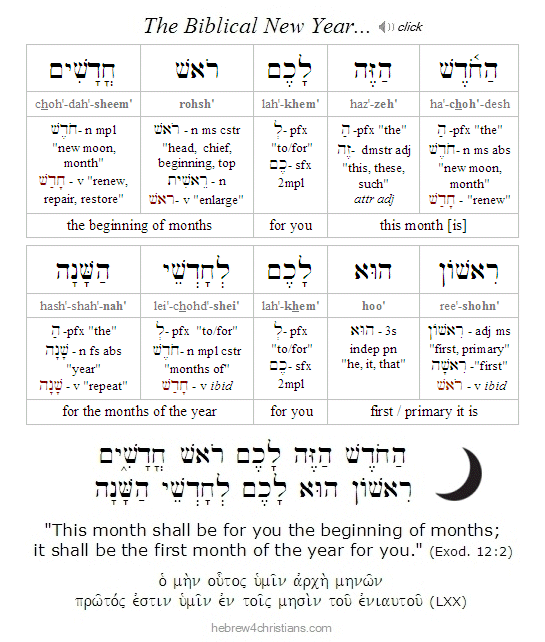
The Biblical New Year begins at the appearance of the first "new moon" of spring, that is, when the waxing crescent of the moon is first sighted. Biblically, this new moon is called called Rosh Chodashim (ראשׁ חֳדָשִׁים), "the head of the months," and its observance is considered the very first commandment given to Israel before the great Exodus from Egypt took place: החדשׁ הזה לכם ראשׁ חדשׁים ha·choh·desh · ha·zeh · lah·khem · rosh · choh·dah·sheem "This month shall be for you the beginning of months;
|


|
|
|
|
Names for Rosh Chodashim |
|
|
|
|
In the Scriptures and Jewish tradition there are various names given to "this month," including the following:
|
|
|
||||||||||||||||||
|
|
|
|
The midrash states: "When the Holy One, blessed be He, created the world, He established the beginning of months and years (i.e., Rosh Hashanah), but when He chose Ya'akov and his children for service, He established Nisan as the month of redemption and rebirth" (Shemot Rabbah). According to the medieval Jewish sage Nachmanides (i.e., the Ramban), the Egyptian belief in the zodiac implied that God had abandoned the affairs of the natural world by consigning them under the forces of the stars and constellations. In response, the LORD chose the month of Nisan (the constellation of the lamb) for the Passover sacrifice in order to demonstrate that Israel did not leave on account of the influence of the stars but entirely because of the power of God.... |
|
|
|
|
|
|
|
|
|
How Many "New Years Days"? |
|||||||
|
As we've seen, the Torah designates the month of Nisan (Scripturally called aviv, or "spring") as the first month of the year (Exod. 12:2). Originally, then, the Hebrew calendar was lunar and observational. When the new moon was sighted, a new month begun. Since the Torah also identified Sukkot as "the end of the (harvest) year" (Exod. 23:16), the sages of the Mishnah later identified the Fall month of Tishri (i.e., the "seventh month") as the start of a new year.... During the Babylonian exile (6th century BC), Babylonian names for the months (i.e., Tammuz) were adopted. This might harken back to the earlier Summerian Calendar of Abraham's day...
In practical terms, however, there are two "New Years" in Jewish tradition. The first occurs two weeks before Passover (Nisan 1) and the second occurs ten days before Yom Kippur (the other two "new years" are not regularly observed, except by the ultra-orthodox). The first New Year marks the month of the redemption of the Jewish people -- and it is also the month in which Yeshua was sacrificed upon the cross at Moriah to redeem us from our sins. The second marks the month of Israels' corporate salvation that will be fulfilled in the End of Days. Oddly enough for most Christians, "New Years Day" should be really celebrated in the spring, certainly not in "January." |
|||||||
|
Shabbat Hachodesh |
|||||||
|
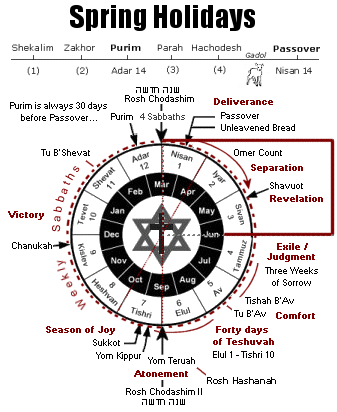
The New Moon of Nisan is the most significant of the "new moons" of the Jewish calendar since it initiates the first month of the Biblical Calendar - and therefore represents the Biblical "New Year's Day." Of all the various Rosh Chodesh celebrations, then, Rosh Chodesh Nisan is foundational, since it presents the starting point for the cycle of the yearly festivals (mo'edim) that reveal prophetic truths about the LORD God of Israel and His beloved Son, Yeshua the Mashiach, blessed be He. |
|||||||
 |
|||||||
|
Rosh Chodesh Nisan Blessing |
|||||||
|
|
|
|
Since Rosh Chodesh Nisan marks the new beginning of the Biblical year, we humbly ask the LORD to help us prepare for the coming month and the season of Passover: יְהִי רָצוֹן מִלְּפָנֵיךָ יהוה אֱלהֵינוּ ye·hee · rah·tzon · meel·fah·ne'·kha · Adonai · E·loh·hey'·noo "May it be Your will, LORD our God and God of our fathers, |
|
|
|
|
Thanking God for the Appointed Times |
|
|
|
|
It is surely appropriate to thank the LORD God of Israel for the holidays as a revelation of Yeshua our Messiah at this time, as well: בָּרוּךְ אַתָּה יהוה אֱלהֵנוּ מֶלֶךְ הָעוֹלָם ba·rookh · a·tah · Adonai · E·loh·hei'·noo · me'·lekh · ha·oh·lahm "Blessed art You, LORD our God, King of the universe, |

|
|
|
|
To a good year in our Messiah! |
|
|
|
|
The following prayer is customarily said during Rosh Hashanah, but it is equally applicable for the New Year of Nisan and the Season of Passover: יְהִי רָצוֹן מִלְּפָנֶיךָ יהוה אֱלהֵינוּ ye·hee · rah·tzohn · meel·fah·ney'·kha · Adonai · E·loh·hey'·noo "May it be your will, LORD our God |
|
|

|
|
|
|
|