|
|
 |
|
|
Introduction
|
|
|
|
Yom Kippur, or the "Day of Atonement," is the holiest day of the Jewish year, and provides prophetic insight regarding the Second Coming of the Messiah, the restoration of national Israel, and the final judgment of the world. It is also a day that reveals the High-Priestly work of Yeshua as our Kohen Gadol (High Priest) after the order of Malki-Tzedek (Heb. 5:10, 6:20).
The term Yom Kippur is actually written in the plural in the Torah, Yom Ha-Kippurim (יוֹם הַכִּפֻּרִים), perhaps because the purification process cleansed from a multitude of transgressions, iniquities, and sins. However, the name also alludes to the two great atonements given by the LORD - the first for those among the nations who turn to Yeshua for cleansing and forgiveness, and the second for the purification of ethnic Israel during Yom Adonai, the great Day of the LORD at the end of days.
|
|
|
|
|
|
Kippurim can be read as Yom Ke-Purim, a "day like Purim," that is, a day of deliverance and salvation (as explained in the Book of Esther). Thus the day on which Yeshua sacrificed Himself on the cross is the greatest "Purim" of all, since through Him we are eternally delivered from the hands of our enemies.
The Torah states that Yom Kippur was the only time when the High Priest could enter the Holy of Holies and call upon the Name of YHVH to offer blood sacrifice for the sins of the people. This "life for a life" principle is the foundation of the sacrificial system and marked the great day of intercession made by the High Priest on behalf of Israel.
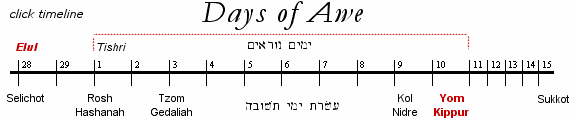
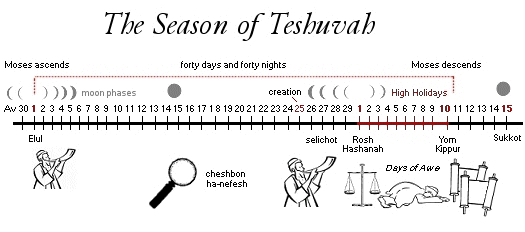
In traditional Judaism, the day of Yom Kippur marks the climax of the ten day period of repentance called the "Days of Awe," or yamim nora'im (יָמִים נוֹרָאִים). According to the sages of Jewish tradition, on Rosh Hashanah the destiny of the righteous, the tzaddikim, are written in the Book of Life (סֵפֶר הַחַיִּים), and the destiny of the wicked, the resha'im, are written in the Book of Death. However, most people will not be inscribed in either book, but have ten days -- until Yom Kippur -- to repent before sealing their fate. Hence the term Aseret Yemei Teshuvah (עֲשֶׂרֶת יְמֵי תְּשׁוּבָה) - the Ten Days of Repentance. On Yom Kippur, then, every soul's name will be sealed in one of the two books. For this reason Yom Kippur is really the climax of the 40 day "Season of Teshuvah."
 |
Since man was created for the sake of teshuvah (תְּשׁוּבָה), Yom Kippur, or the Day of "at-one-ment," is considered the holiest day of the year, called "Yom ha-kadosh" (יוֹם הַקָּדוֹשׁ). On the Hebrew calendar, Erev Yom Kippur begins at nightfall on Tishri 9 and continues 25 hours through the next day until nightfall. It is a solemn day marked by complete fasting, prayer, and additional synagogue services.
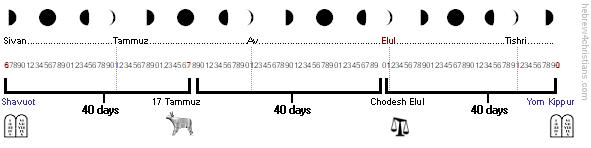
According to the Jewish sages, on the 6th of Sivan, exactly seven weeks after the Exodus (i.e., 49 days), Moses first ascended Mount Sinai to receive the Torah (Shavuot). Just forty days later, the people rebelled, and on the 17th of Tammuz, the tablets of the covenant were broken. Moses then interceded for Israel for another forty days until he was called back up to Mount Sinai on Elul 1 and received the revelation of Name YHVH (Exod. 34:4-8). After this, he was given the Second Tablets and returned to the camp on Tishri 10, which later was called Yom Kippur. Moses' face was shining with radiance in wonder of the coming New Covenant which was prefigured in the rituals of the Day of Atonement (Exod. 34:10).
 |
|
|
|
|
|
|
|
|
|
This explains why Orthodox Jews begin the "Season of Teshuvah" beginning with Elul 1 and continuing through to Tishri 10 -- for the 40 days that Moses was upon the mountain receiving the second set of tablets. Here we also find the first inkling of the Book of Life (see Rosh Hashanah), when Moses asked to be stricken from "the Book you have written" if God would not make an atonement for his people (Exod. 32:32-3). The willingness of Moses to be "stricken from the book" on the people's behalf is a powerful image of the mediating role of Yeshua our Messiah (Heb. 9:15).
|
|
|
|
The Meaning of the word Kippur
|
|
|
|
The "Day of Atonement" is the English phrase for Yom Kippur. The shoresh [root] for the word "Kippur" is kafar (כָּפַר), which probably derives from the word kofer, meaning "ransom." This word is parallel to the word "redeem" (Psalm 49:7) and means "to atone by offering a substitute." The great majority of usages in the Tanakh concern "making an atonement" by the priestly ritual of sprinkling of sacrificial blood to remove sin or defilement (i.e., tahora). The life blood of the sacrificial animal was required in exchange for the life blood of the worshipper (the symbolic expression of innocent life given for guilty life). This symbolism is further clarified by the action of the worshipper in placing his hands on the head of the sacrifice (semichah) and confessing his sins over the animal (Lev. 16:21; 1:4; 4:4, etc.) which was then killed or sent out as a scapegoat. The shoresh also appears in the term Kapporet [the so-called "Mercy Seat," but better rendered as simply the place of atonement]. The Kapporet was the golden cover of the sacred chest in the Holy of Holies of the Tabernacle (or Temple) where the sacrificial blood was presented.
כִּי נֶפֶשׁ הַבָּשָׂר בַּדָּם הִוא
וַאֲנִי נְתַתִּיו לָכֶם עַל־הַמִּזְבֵּחַ
לְכַפֵּר עַל־נַפְשׁתֵיכֶם
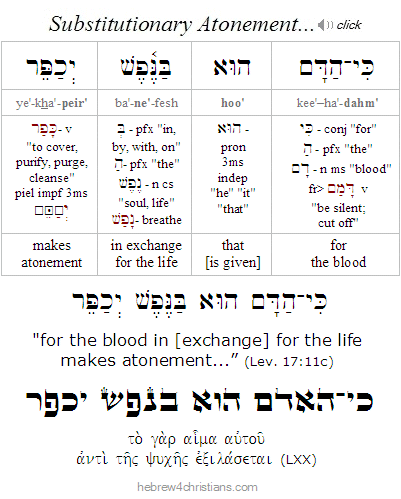
כִּי־הַדָּם הוּא בַּנֶּפֶשׁ יְכַפֵּר
kee ne·fesh ha·ba·sar ba·dahm hee
va·a·nee ne·ta·teev la·khem al ha·meez·bei·ach
le·kha·peir al naf·sho·tei·khem
kee ha·dahm hoo ba·ne·fesh ye·kha·peir

"For the life of the flesh is in the blood,
and I have given it for you on the altar to atone for your souls,
for it is the blood that makes atonement by the life."
(Lev. 17:11)
Hebrew Study Card
|
|
|
The message of the central book of the Torah (Leviticus) is that since God is holy, we must be holy in our lives as well, and this means first of all being conscious of the distinction between the sacred and the profane, the clean and the unclean, and so on: "You are to distinguish between the holy (i.e., ha-kadosh: הַקּדֶשׁ) and the common (i.e., ha-chol: הַחל), and between the unclean (i.e., ha-tamei: הַטָּמֵא) and the clean (i.e., ha-tahor: הַטָּהוֹר)" (Lev. 10:10, see also Ezek. 44:23). Just as God separated the light from the darkness (Gen. 1:4), so we are called to discern between (בֵּין) the realms of the holy and the profane, the sacred and the common, and the clean and the unclean. Indeed, the Torah states "God called the light Day, and the darkness he called night," thereby associating His Name with the light but not with the darkness (Gen. 1:5).
Spiritually understood, the Mishkan (i.e., Tabernacle) physically represented the separation of these realms, as may be illustrated with the following diagram:
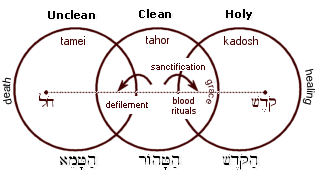 |
The word "sacrifice" is korban (קָרְבָּן), which comes from the root karov (קָרַב) meaning to "draw close" or "to come near." In the Tabernacle, korbanot (קָרְבָּנוֹת) were various ritual acts that were offered upon the altar to cleanse the unclean sinner so that he or she could draw near to a Holy God. Because of this, God instituted sacrificial blood as the cleansing agent that purified from the effects of defilement and sin (Lev. 17:11; Heb. 9:22). We can see the general process of purification by considering the case of the metzora (or "leper") as described in Leviticus 14 in a ritual that somewhat resembled the elaborate Yom Kippur ritual performed by the High Priest.
|
|
|
|
The Torah Observance
|
|
|
|
The Role of the High Priest
|
|
|
|
|
Every year on Tishri 10 the Kohen Gadol [High Priest] would perform a special ceremony to purge defilement from the Tabernacle (mishkan) or Temple (Bet Ha-Mikdash) as well as from the people of Israel (see Leviticus 16 for the details). In particular, in addition to the regular daily offerings, he would bring a bull and two goats as a special offering, and the bull would be sacrificed to purge the mishkan/temple from the defilements caused by misdeeds of the priests and their households (Leviticus 16:6). He would sprinkle the blood of the bull inside the veil of the Holy of Holies upon the kapporet (i.e., the cover of the Ark of the Covenant). Then he would draw lots and select one of the two goats to be a sin offering on behalf of the people (this goat was designated L'Adonai - "to the LORD"). He would likewise enter the Holy of Holies sprinkle the blood of the goat upon the kapporet (note that the idea that the Kohen Gadol had a rope tied around his ankle in case he died when performing these duties is likely a medieval legend). Finally, the High Priest would lay both hands upon the head of the second goat (designated "for Azazel") while confessing all of the transgressions of the people. This goat was then driven away into the wilderness, carrying on it "all their iniquities unto a land not inhabited" (Lev. 16:22). According to the Talmud, a scarlet cord was tied around the neck of the scapegoat that was reported to have turned white as the goat was led away from city. However, for the last forty years before the Temple was destroyed (in AD 70), the scarlet cord failed to change color.
|
|
|
|
|
|
The Role of the People
|
|
|
|
While the High Priest performed these functions, the people would fast in eager anticipation of the outcome of the rituals. After completing his tasks, the garments of the High Priest were covered with blood (Lev. 6:27). Only after this did the LORD accept the sacrifice (according to one midrash, as the High Priest hung out his garments, a miracle took place and his garments turned from bloodstained crimson to white; see Isaiah 1:18).
In three separate passages in the Torah, the Jewish people are told "the tenth day of the seventh month (Tishri) is the Day of Atonement. It shall be a sacred occasion for you: you shall afflict your souls" (Lev. 16:29-34, Lev. 23:26-32, Num. 29:7-11). This is the only Holiday of the year where fasting is explicitly commanded by the LORD. It also was a "Shabbat Shabbaton," or a day of complete abstention from any kind of mundane work.
It is enlightening to note the sequence of this holiday in relation to the time of preparation (Elul) and the activities surrounding Rosh Hashanah leading up to Yom Kippur. First God commands that we repent, or return to Him in earnestness of heart, and then He provides the means for reconciliation or atonement with Him.
|
|
|
Modern-day Observances of Yom Kippur
|
|
|
|
|
Though originally focused on the role of the Kohen Gadol (High Priest) and the purification of the Sanctuary, since the destruction of the Temple in 70 AD, Rabbinic tradition states that each individual Jew is supposed to focus on his personal avodah, or service to the LORD. Most Yom Kippur prayers therefore revolve around the central theme of personal repentance and return.
The Five Afflictions (ennuim)
According to halakhah (i.e., Jewish law), we must abstain from five forms of pleasures, all based on reasoning from Leviticus 23:27:
- Eating and drinking
- Washing and bathing
- Applying lotions or perfume
- Wearing leather shoes
- Marital relations
By fasting and praying all day, we are said to resemble angels. By giving up the sensual pleasures of life and refraining from melakhah, we are said to live for 25 hours as if we are dead (many men wear kittels (white burial robes) and white raiment, to remind them of their fate as mortals before God).
Shabbat Shabbaton
The Torah refers to Yom Kippur as "shabbat shabbaton" (שַׁבַּת שַׁבָּתוֹן), a time when all profane work (melakhah) is set aside so the soul could focus on the holiness of the LORD. The first occurrence of this phrase is found in Exodus 16:23, regarding the restriction of collecting manna in the desert during the seventh day. This restriction was later incorporated into the law code for the Sabbath day (Exod. 31:15; 35:2). The phrase also occurs regarding Rosh Hashanah (Lev. 23:24), Yom Kippur (Lev. 16:31; 23:32), two days of Sukkot (Lev. 23:39), the two days of Passover (Lev. 23:7-8), and the day of Shavuot (Num. 28:26). According to the Jewish sages, performing any form of work (other than work required to save a life) on a special Sabbath is punishable by premature death.
If you add up these days, you will find there are seven prescribed days of "complete rest" before the LORD, and the sages identified Yom Kippur as the Sabbath of these other special Sabbath days, that is, Yom ha-kadosh (יוֹם הַקָּדוֹשׁ), "the holy day." Indeed, the Talmud notes that "seven days before Yom Kippur, we separate the High Priest," corresponding to the seven-day seclusion of Aaron and his sons before the inauguration of the Tabernacle (Lev. 8:33).
The sages say that Yom Kippur is the only day that Satan is unable to lodge accusation against Israel, since the gematria of "satan" (שָׂטָן) is 364, suggesting that the accuser denounces Israel 364 days of the year, but on the 365th day - Yom Kippur - he is rendered powerless, just as he will be in the world to come (Maharsha on Yoma 2a).
Note that those who trust in God's salvation understand that our ultimate "rest" is given to us in Yeshua, our great High Priest after the order of Malki-Tzedek, who presented his own blood to make "at-one-ment" for our souls before the Father in the Holy of Holies made without hands - at the cross....
|
|
|
|
|
The Kapparot Ceremony
|
|
|
|
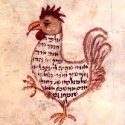
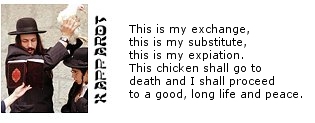
Among Ultra-Orthodox Jews there is a minhag (custom) called kapparot (כַּפָּרוֹת) that is often performed before erev Yom Kippur. This is a sort of "scapegoat" ceremony in which a person's sins are symbolically transferred to a rooster or hen. First, various verses from the Psalms and the Book of Job are recited. Then the live chicken is swung around the head three times while the following declaration is made: "This fowl shall be in my place, it shall be my atonement, my expiation. It shall go to death, and I shall proceed to a good, long life and peace."
|
|
|
|
|
|
The chicken is then taken to a shochet (kosher butcher) to be slaughtered and given to the poor for their Erev Yom Kippur meal (seudah ha-mafseket). Those who study the Torah understand the need for blood sacrifice -- the "life-for-life" principle implied in the Torah's sacrificial system.
According to Encyclopedia Judaica, the custom was first discussed by Jewish scholars in the ninth century. They explained that since the Hebrew word gever can mean both "man" or "rooster," the punishment of the bird could be substituted for that of a person. Later, the widely influential medieval kabbalist Rabbi Isaac Luria (1574-1532) endorsed the ritual, and therefore many Kabbalists continue the practice to this day.
|
|
|
|
|
|
Presumably, the sacrifice of the chicken is meant to take the place of the sacrifices offered at the Temple.
|
|
|
|
|
The requirement for blood sacrifice -- the "life-for-life" principle -- is the heart of the Torah's sacrificial system. The kapparot ceremony is therefore an clear acknowledgment of the authority of Leviticus 17:11, the key verse of substitutionary atonement given in the Torah: "For the life of the flesh is in the blood (כִּי נֶפֶשׁ הַבָּשָׂר בַּדָּם), and I have given it for you on the altar to atone (לְכַפֵּר) for your souls, for it is the blood that makes atonement by the life (כִּי־הַדָּם הוּא בַּנֶּפֶשׁ יְכַפֵּר)." A person who studies and believes the written Torah understands the clear need for blood atonement - notwithstanding the rationalizations developed by later rabbinical Judaism.
Some people also observe Erev Yom Kippur by going to the mikveh - the ritual bath - to purify themselves before the Holy Day. Jewish tradition also states that forgiveness can be sought from God only for those sins committed against God (for example, by breaking His laws). Sins committed against others must be confessed and reconciliation sought from the offended party - and then forgiveness may be sought also from God (Matt 5:23-4). The process of making amends with others we have harmed is called mechilah (מְחִילָה). Reconciliation is often attempted during Elul and the period of Selichot.
|
|
|
|
Erev Yom Kippur
|
|
|
|
The Meal before Yom Kippur
The Yom Kippur fast begins an hour before sundown on Tishri 9, and lasts for 25 hours, until an hour past sundown on Tishri 10 (Lev. 23:32). Unlike other Jewish holidays that last for two days (due to the uncertainty of the calendar), the sages only required the fast to last for one full day and night. The sages state that "afflicting the soul" (i.e., fasting, etc.) is not undertaken to punish ourselves for our sins, but rather to help us focus entirely on our spiritual side. Indeed the Hebrew word for used for "afflict" (עָנָה) means to humble yourself... Note that there is no prescribed Hebrew blessing to be recited for the fast, since a blessing is not recited over not doing something.
On Erev Yom Kippur, a special meal (seudah ha-mafseket) is usually prepared - the last meal before sundown - and certain erev Yom Kippur blessings are recited. This meal includes the holiday candle lighting blessing ("Baruch Atah, Adonai Eloheinu, Melekh Ha-olam, asher kidshanu b'mitzvotav vitzivanu l'hadlik ner shel Yom Ha-kippurim") and the Shehecheyanu. A memorial candle (called yahrzeit) is often lit for deceased parents or grandparents, and women often wear white, while men wear "kittels" (white robes also used for burial shrouds). After eating, it is customary to wish everyone present a Tzom Kal - an "easy fast." Another common greeting is "G'mar chatimah tovah" - "May you be sealed (in the Book of Life) for good."
|
|
|
|
Yom Kippur Synagogue Services
|
|
|
|
Most of Yom Kippur is spent at the synagogue praying and listening to chants. In fact, Yom Kippur is the only Jewish Holiday that requires five separate services for the observant Jew to attend! This day is, essentially, your last appeal, your last chance to change "the judgment of God" and to demonstrate your repentance and make amends.
Recall from Rosh Hashanah that one of the themes of the Days of Awe is that God has "books" that He writes our names in, noting who will live and who will die in the forthcoming year. These books are "written" on Rosh Hashanah, but our deeds during the Days of Awe can alter God's decree. The actions that change the decree are teshuvah (repentance), tefillah (prayer) and tzedakah (charity, good deeds). The books are "closed and sealed" on Yom Kippur.
|
|
|
|
|
|
As with Rosh Hashanah, a white satin parokhet (curtain which adorns the ark in the synagogue, mimicking the curtain which separated the sanctuary from the Holy of Holies in the Temple), is hung in place of the heavy velvet one used at other times.
- The Kol Nidrei (כָּל נִדְרֵי) Service
The evening service begins with the Kol Nidrei (i.e., כָּל נִדְרֵי, "all vows"], an Aramaic chant that declares null and void any promises made during the previous year (Sephardim) or for the coming year (Ashkenazim). Kol Nidrei is actually considered a "legal procedure," and therefore entails the use of various halakhic [legal] formulations such as recitation three times before a minyan, before sundown, and so on. Normally tallit [prayer shawls] are worn only in the morning service, but during Yom Kippur, they are worn during all of the services. The Aron HaKodesh (Torah cabinet) is left open while the Torah scrolls are carried around the synagogue before Kol Nidrei to indicate that the Gates of Repentance are open.
- The Ma'ariv Service
The Ma'ariv (evening) service consists of the recitation of Kaddish, the Shema, the Amidah (standing prayer), along with the confession of sins and additional prayers (selichot) that are recited only on the night of Yom Kippur. In addition, liturgical poems (piyyutim) are recited as well. Most of this service is spent reading from a machzor (High Holiday prayerbook).
The Ma'ariv service is chanted in a different style and additions to the Amidah are made, including the Vidduy (וִדּוּי), or confessional. The obligation of Vidduy derives from Scripture: "If a man or woman sins against his fellow man, thus being untrue to God..., they must confess the sin that he has committed" (Numbers 5:6-7). Note the plural personal pronoun used in the confession - implying that the sin of an individual is also borne by the community. Vidduy is said in the plural because we are all responsible for one another (Shavu'ot 39a).
Viduy prayers comprise two main sections: the Ashamnu ('We have trespassed'), a shorter, more general list of sins ("we have been treasonable, we have been aggressive, we have been slanderous" - sometimes sung) and the Al Chet, a longer, alphabetically arranged, and more particular list of sins ("for the sin that we have sinned before you forcibly or willingly, and for the sin that we have sinned before you by acting callously").
When viduy is recited, you should strike the breast lightly as if to say, "You (my heart) caused me to sin" (Mishnah Berurah 603:7). Viduy is recited ten times over the course of the five services of Yom Kippur, paralleling the Ten Commandments which have been violated.
- The Shacharit Service
The Shacharit (morning) service is not unlike other services for festivals during the Jewish year. The traditional morning prayers, the recitation of the Shema and Amidah, and the Torah reading are all part of the service. During Torah reading service there are six aliyot (separate readings by different people), one more than on other holidays (though if Yom Kippur occurs on Shabbat, there are seven aliyot).
The Torah's name for the Day of Atonement is Yom Ha-Kippurim (יוֹם הַכִּפֻּרִים), meaning "the day of covering, canceling, pardon, reconciling." Under the Levitical system of worship, the High Priest would sprinkle sacrificial blood upon the Kapporet (כַּפּרֶת) - the covering of the Ark of the Covenant - to effect "purification" (i.e., kapparah: כַּפָּרָה) for the previous year's sins. Notice that Yom Kippur was the only time when the High Priest could enter the Holy of Holies and invoke the sacred Name of YHVH (יהוה) to offer blood sacrifice for the sins of the Jewish people. This "life for a life" principle is the foundation of the sacrificial system and marked the great day of intercession made by the High Priest on behalf of Israel.
- The Yizkor (יִזְכּר) Service
The Yizkor portion of Yom Kippur functions as a memorial service for family members who have died. Traditionally it is recited following the Torah reading of the Shacharit service, though some communities do it in the early afternoon.
- The Musaf (מוּסָף) Service
The Musaf (additional) service immediately follows the morning service and is divided into two parts: the repetition of the Amidah (by the cantor) and the "Avodah" service, which recounts the priestly service for Yom Kippur in ancient times. In four places of the service, some people might prostrate themselves (during the re-telling of the High Priest and his confessions). After this, a portion of the service is devoted to the retelling of how some early Jewish sages were martyred during the reign of the Roman emperor Hadrian. The Musaf service ends with the "Aaronic benediction" (i.e., birkat kohanim).
- Minchah Service
The Minchah (afternoon) service includes a Torah reading service (Leviticus 18), another repetition of the Amidah, and the recitation of the "Avinu Malkenu" poem. In addition, since it focuses on the importance of teshuvah (repentance) and prayer, the entire Book of Jonah is recited as the Haftarah portion of the Torah service.
- The Ne'ilah (נְעִילָה) Service
According to Jewish tradition, on Rosh Hashanah the destiny of the righteous (the tzaddikim) are written in the Book of Life, and the destiny of the wicked (the resha'im) are written in the Book of Death. However, many people (perhaps most people) will not be inscribed in either book, but have ten days -- until Yom Kippur -- to repent before sealing their fate. On Yom Kippur, then, a final appeal is made to God to be written in the Book of Life.
The word ne'ilah (נְעִילָה) comes from a word which means "closing" or "locking" [the gates of heaven (or the Temple Gates)]. The appeal to have our names "sealed" in the Book of Life" is made at this time. This closing service has a sense of urgency about it, and concludes with a responsive reading of the Shema, with the phrase "barukh shem kavod malkhuto l'olam va-ed" said aloud three times, and the phrase "the LORD He is God (i.e., Adonai hu ha-Elohim: יְהוָה הוּא הָאֱלהִים) is repeated seven times by the entire congregation (1 Kings 18:39).
(Note: During the time of the Second Temple, the High Priest would say aloud the sacred Name "YHVH" three times during the Yom Kippur avodah. During each confession, when the priest would say the Name, all the people would prostrate themselves and say aloud, Baruch shem K'vod malchuto l'olam va'ed - "Blessed be the Name of the radiance of the Kingship, forever and ever.")
This declaration is followed by a long, final blast of the shofar (i.e., tekiah gedolah), the "great shofar," to remind us how the shofar was sounded to proclaim the Year of Jubilee Year (יוֹבֵל) of freedom throughout the land (Lev. 25:9-10).
|
|
|
|
Worshippers then exclaim, "L'shanah haba'ah b'Yerushalayim!" After the service ends, some synagogues perform also a Havdalah ceremony.
At this point, people are generally quite relieved that they have "made it" through the Days of Awe, and a celebratory mood sets in (traditionally a time of courtship and love follow this holiday). Since Sukkot is only five days away, it is common to begin planning to set up your sukkah for the upcoming holiday.
|
|
|
|
Yom Kippur Torah Readings
|
|
|
|
Yom Kippur and the New Covenant
|
|
|
|
|
|
One of the roles of our beloved Mashiach Yeshua (Jesus Christ) is that of Kohen HaGadol (High Priest) who offered true kapparah [atonement] for our sins by offering His own blood in the Holy of Holies made without hands.
|
|
|
|
|
As it is written in the letter of Hebrews:
|
|
|
|
Therefore, holy brothers, you who share in a heavenly calling, consider Jesus, the apostle and high priest of our confession, who was faithful to him who appointed him, just as Moses also was faithful in all God's house. (Hebrews 3:1-2)
|
|
|
|
The Importance of a Blood Sacrifice
|
|
|
|
The importance of blood sacrifice (i.e., substitutionary atonement) cannot be overstated in the Scriptures since it constitutes the fundamental means of atonement that is given through the sacrificial system. Indeed this principle is enshrined in the central text of sacrifice itself, Leviticus 17:11:
כִּי נֶפֶשׁ הַבָּשָׂר בַּדָּם הִוא
וַאֲנִי נְתַתִּיו לָכֶם עַל־הַמִּזְבֵּחַ
לְכַפֵּר עַל־נַפְשׁתֵיכֶם
כִּי־הַדָּם הוּא בַּנֶּפֶשׁ יְכַפֵּר
kee ne·fesh ha·ba·sar ba·dahm hee
va·a·nee ne·ta·teev la·khem al ha·meez·bei·ach
le·kha·peir al naf·sho·tei·khem
kee ha·dahm hoo ba·ne·fesh ye·kha·peir
"For the life of the flesh is in the blood,
and I have given it for you on the altar to atone for your souls,
for it is the blood that makes atonement by the life."
Hebrew Study Card
A blood sacrifice is required by the LORD for the issue of sin. Leviticus 17:11 agrees with the teaching in the New Testament in Hebrews 9:22: "Without the shedding of blood there is no remission of sins" (χωρὶς αἱματεκχυσίας οὐ γίνεται ἄφεσις). In the Talmud (Yoma 5a) it is likewise written, "There is no atonement without blood." The substitutionary shedding of blood, the "life-for-life" principle, is essential to true "at-one-ment" with the LORD God.
Yeshua offered His own body up to be the perfect Sacrifice for sins. By His shed blood we are given complete atonement before the LORD. "For our sake he made him to be sin who knew no sin, so that in him we might become the righteousness of God" (2 Cor. 5:21). The Levitical system of animal sacrifices, including the elaborate Yom Kippur ritual, was meant to foreshadow the true and abiding Sacrifice of Yeshua as the means of our reconciliation with God. The B'rit Yeshanah (Old Covenant) provides a shadow of the substance revealed in the B'rit Chadashah (New Covenant). If the old covenant had been sufficient to provide a permanent solution to the problem of our sin, there never would have been need for a new covenant to supercede it (Hebrews 8:7).
Under the old covenant, sacrifices merely "covered" sins, but under the new covenant, these sins are taken entirely away (Hebrews 7:27, 9:12, 9:25-28). There is no more need for continual sacrifices, since Yeshua provided the once-and-for-all sacrifice for all of our sins (Hebrews 9:11-14; 9:24-28; 10:11-20).
Indeed, Yeshua ha-Mashiach is the "propitiation" or "expiation" for our sins. The Greek word used in Romans 3:25, 1 John 2:2, and 1 John 4:10 ("hilasterion") is the same word used in the LXX for the kapporet [cover of the ark of the covenant] in the Holy of Holies which was sprinkled with the blood of the sacrifice on Yom Kippur.
For Messiah has entered, not into holy places made with hands, which are copies of the true things, but into heaven itself, now to appear in the presence of God on our behalf. Nor was it to offer himself repeatedly, as the high priest enters the holy places every year with blood not his own, for then he would have had to suffer repeatedly since the foundation of the world. But as it is, he has appeared once for all at the end of the ages to put away sin by the sacrifice of himself... So Messiah, having been offered once to bear the sins of many, will appear a second time, not to deal with sin but to save those who are eagerly waiting for him (Heb. 9:24-ff).
For by one offering he hath perfected for ever them that are sanctified (Heb. 10:14).
|
|
|
|
What do Messianic Jews do regarding Yom Kippur? Do we fast, afflict ourselves, and confess our sins, or do we rejoice in the knowledge that we are forgiven of all our sins because of Yeshua's perfect avodah as our Kohen Gadol of the New Covenant? In other words, should we be sad and afflicted or should we be happy and comforted?
In post-Temple Judaism (i.e., rabbinical Judaism) it is customary for Jews to wish one another g'mar chatimah tovah (גְּמַר חַתִימָה טוֹבָה), "a good final sealing" during the Ten Days of Awe (i.e., the ten days running from Rosh Hashanah until Yom Kippur). The reason for this is that according to Jewish tradition the "writing of God's verdict" (for your life) occurs on Rosh Hashanah, but the "sealing of the verdict" occurs on Yom Kippur. In other words, God in His Mercy gives us another ten days to do "teshuvah" before sealing our fate.... But it's up to us -- and our teshuvah -- to "save ourselves" from God's decree of death. Our merits (mitzvot) are the key: וּתְשׁוּבָה וּתְפִלָּה וּצְדָקָה מַעֲבִירִין אֶת רעַ הַגְּזֵרָה / "Teshuvah, prayer, and charity deliver us from the evil decree."
Of course as Messianic Jews (and Christians) we have a permanent "sealing" for good by the grace and love of God given to us in Yeshua our Messiah (Eph. 1:13, 4:30; 2 Cor. 1:21-22). The Torah's statement that sacrificial blood was offered upon the altar to make atonement (כַּפָּרָה) for our souls (Lev. 17:11) finds its final application in the "blood work" of Yeshua upon the cross at Moriah (Rom. 5:11). The substitutionary shedding of blood, the "life-for-life" principle, is essential to the true "at-one-ment" with God. The ordinances of the Levitical priesthood were just "types and shadows" of the coming Substance that would give us everlasting atonement with God (Heb. 8-10). Because of Yeshua, we have a Kohen Gadol (High Priest) of the better Covenant, based on better promises (Heb. 8:6). For this reason it is entirely appropriate to celebrate Yom Kippur and give thanks to the LORD for the permanent "chatimah tovah" given to us through the salvation of His Son.
It must always be remembered that Torah (תּוֹרָה) is a "function word" that expresses our responsibility in light of the covenantal acts of God. As the author of the Book of Hebrews makes clear: "When there is a change in the priesthood (הַכְּהוּנָּה), there is necessarily (ἀνάγκη) a change in the Torah as well" (Heb. 7:12). The Levitical priesthood expresses the Torah of the Covenant of Sinai (בְּרִית יְשָׁנָה), just as the greater priesthood of Yeshua expresses the Torah of the New Covenant (בְּרִית חֲדָשָׁה).
Still, for the Messianic Jewish believer there is a bit of ambivalence about this holiday, perhaps more than any other of the Jewish year. Part of this ambivalence comes from the "already-not-yet" aspect of the New Covenant itself. Already Yeshua has come and offered Himself up as kapparah (atonement/propitiation) for our sins; already He has sent the Ruach Hakodesh (Holy Spirit) to write truth upon our hearts; already He is our God and we are His people. However, the New Covenant is not yet ultimately fulfilled since we await the return of Yeshua to restore Israel and establish His kingdom upon the earth... Since prophetically speaking Yom Kippur signifies ethnic Israel's atonement secured through Yeshua's sacrificial avodah as Israel's true High Priest and King, there is still a sense of longing and affliction connected to this holiday that will not be removed until finally "all Israel is saved." So, on the one hand we celebrate Yom Kippur because it acknowledges Yeshua as our High Priest of the New Covenant, but on the other hand, we "have great sorrow and unceasing anguish in our hearts" for the redemption of the Jewish people and the atonement of their sins (Rom. 9:1-5; 10:1-4; 11:1-2, 11-15, 25-27). In the meantime, we are in a period of "mysterious grace" (yemot ha-mashiach) wherein we have opportunity to offer the terms of the New Covenant to people of every nation, tribe and tongue. After the "fullness of the Gentiles" is come in, however, God will turn His full attention to fulfilling His promises given to ethnic Israel. That great Day of the LORD is coming soon, chaverim...
The Book of Life
Some Messianic Jews observe Yom Kippur (i.e., keep the 25 hour fast, confess sins, etc.) in order to better identify with the Jewish people, while others might observe it as a special time of personal confession and teshuvah. We are careful, however, to keep in mind that such observance does not grant us a "favorable judgment" before the LORD or determine whether our names will be written in Sefer ha-chayim (the Book of Life), since Yeshua's sacrifice and intercession is all we need for at-one-ment with the Father. Those who belong to Yeshua are indeed written in the "Lamb's book of life" (Phil. 4:3; Rev. 3:5; 13:8; 17:8; 20:12, 15; 21:27; 22:19).
What is Sefer ha-chayim? This is the allegorical book in which God records the names and lives of the righteous (tzaddikim). According to the Talmud it is open on Rosh Hashanah (the Book of the Dead, sefer hametim, is open on this date as well) and God then examines each soul to see if teshuvah is sh'leimah (complete). If a person turns to God and makes amends to those whom he has harmed, he will be given another year to live in the following (Jewish) year. On the other hand, if he does not repent, then the decree may be given that he will die during the coming year...
In Jewish tradition, Yom Kippur is essentially your last appeal, your last chance to change "the judgment of God" and to demonstrate your repentance and make amends. The books are "written" on Rosh Hashanah, but our deeds during the Ten Days of Awe can alter God's decree. The actions that change the decree are teshuvah (repentance), tefilah (prayer) and tzedakah (good deeds). The books are then "sealed" on Yom Kippur.
Again, it is important to keep in heart that those who are trusting in Yeshua as their Atonement before the Father are thereby declared tzaddikim and their names are written (and sealed) in the Book of Life. The Day of Judgment for our sinful lives has come in the Person of Yeshua the Mashiach, blessed be He. All those who truly belong to Yeshua are written in the "Lamb's book of life " (Phil. 4:3; Rev. 3:5; 13:8; 17:8; 20:12, 15; 21:27; 22:19). Yom Kippur is therefore a time of joy for us, since we have g'mar chatimah tovah (גְּמַר חַתִימָה טוֹבָה), "a good and final sealing," in the Lamb's Book of Life because of Messiah Yeshua, our Great High Priest after the order of Malki-Tzedek!
The traditional viduy (a confessional prayer consisting of two parts, ashamnu and al chet) is written using the first person plural: "We have sinned..." since kol Yisrael arevim zeh bazeh - "All Israel is responsible for one another." Traditionally al chet is recited ten times during the course of the five Yom Kippur services (once for each of the 10 commandments that we have broken). Here's how it starts:
Al Chet...
For the sin which we have committed before You under duress or willingly.
And for the sin which we have committed before You by hard-heartedness.
For the sin which we have committed before You inadvertently.
And for the sin which we have committed before You with an utterance of the lips.
For the sin which we have committed before You with immorality....
For all of these, God of pardon, pardon us, forgive us...
 (continues...) (continues...)
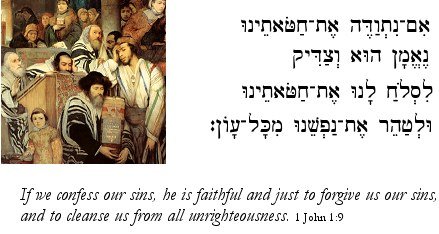
Confession is vitally important for Messianic Jews and Christians, since it both reminds us of our great need for God's intervention in our lives, and also helps us walk in the truth. "If we confess our sins, He is faithful and just, to forgive us our sins and cleanse us from all unrighteousness" (1 John 1:9). "Confess your faults one to another, and pray one for another, that ye (plural) may be healed" (James 5:16).
Eschatologically, Yom Kippur represents the national restoration of Israel at the end of the Great Tribulation period, but it also is a reminder of the terrible cost of sin in our lives. Sin is so offensive and the debt is so great that it took nothing less than the sacrifice of Yeshua Himself in order to secure our reconciliation with God. We therefore should tremble with fear before God in reverent gratitude of His mercy toward us.
Yom Ha-Din - Judgment Day
As Messianic believers, we maintain that Judgment Day has come and justice was served through the sacrificial offering of Yeshua for our sins (2 Cor. 5:21). He is the perfect fulfillment of the Akedah of Isaac. Our names are written in the Lamb's Book of Life, or Sefer HaChayim (Rev. 13:8). We do not believe that we are made acceptable in God's sight by means of our own works of righteousness (Titus 3:5-6), though that does not excuse us from being without such works (as fruit of the Holy Spirit in our lives). The Scriptures clearly warn that on the Day of Judgment to come, anyone's name not found written in the Book of Life will be thrown into the lake of fire (Rev. 20:15). Moreover, all Christians will stand before the Throne of Judgment to give account for their lives (2 Cor. 5:10). "Every man's work shall be made manifest: for the day shall declare it, because it shall be revealed by fire; and the fire shall try every man's work of what sort it is" (1 Cor. 3:13). Life is an examination, a test, and every moment is irrepeatable. Every "careless" word we utter will be echoed on the Day of Judgment (Matt. 12:36-37). Our future day of judgment is being decided today....
The spring festivals (Passover, Firstfruits, and Shavuot) have been perfectly fulfilled in the first coming of Yeshua as Mashiach ben Yosef, and the fall festivals (Yom Teruah, Yom Kippur, and Sukkot) will be fulfilled in His second coming as Mashiach ben David. Since the first advent fulfilled all of the spring mo'edim to the smallest of details, we believe that His second advent portends similar fulfillment as revealed in the fall mo'edim.
After the summer of harvest (John 4:35), the very first fall festival on the Jewish calendar is Yom Teruah (Rosh Hashanah), which is a picture of the "catching away" of kallat Mashiach (the Bride of Christ) for the time of Sheva Berachot (seven "days" of blessing that follows the marriage ceremony). Then will come the Great Tribulation and the "great Day of the LORD" (יוֹם־יְהוָה הַגָּדוֹל). During this time, ethnic Israel will be fully restored to the LORD and their sins will be purged (see Matthew 24). Yeshua will then physically return to Israel to establish His glorious millennial kingdom in Zion. Finally "all Israel will be saved" (Rom. 11:26) and Yeshua will be coronated as the King of King of Kings - Melech Malchei Ha-Melachim (מֶלֶךְ מַלְכֵי הַמְּלָכִים).
May His Kingdom come speedily, and in our day. Amen.
|
|
|
|
|
|
Related Discussion:
|
|
|