|
|
|
|
 |
|
|
Tu B'Shevat
|
|
|
|
|
What is Tu B'Shevat?
|
|
|
|
Tu B'Shevat, or the 15th of the month of Shevat (שְׁבָט), is the traditional date that marks the beginning of a "New Year for Trees." Though it occurs in January/February on the Gregorian calendar, Tu B'Shevat is associated with the start of spring in Israel (since the earliest-blooming trees begin a new fruit-bearing cycle). In the modern State of Israel, Tu B'Shevat is observed as sort of national Arbor Day.
|
|
|
|
The Hebrew name Tu B'Shevat (ט"וּ בִּשְׁבָט) literally means "the fifteenth [day in the month] of Shevat" (שְׁבָט). The word Tu (ט"וּ) is an acronym for the number 15, which is formed using the letters Tet (9) and Vav (6) in combination to form Tet-Vav (15). Note that Yod (10) and Hey (5) are not used because this combination results in YAH (יָהּ), one of the Hebrew Names of God (for more information, click here).
|
|
|
|
|
|
|
The History of Tu B'Shevat
|
|
|
|
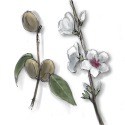
The middle of the month of Shevat is traditionally regarded as the time when spring begins in Israel. The rainy and cold season ends when the blossoms of almond trees first begin to appear. Indeed some scholars have said that originally Tu B'Shevat was a "folk festival" to welcome the re-emergence of spring.
|
|
|
|
|
|
During the time of the Temple, Tu B'Shevat was selected as the date when Temple taxes were assessed from Jewish farmers (i.e., ma'aser). The sages reasoned that by this time the trees had begun to soak up the winter rains, causing their sap to rise, and therefore Tu B'Shevat marked the start of their growing season. In this way Tu B'Shevat became known as "Rosh Hashanah Le'ilanot" (ראש השנה לאילנות), the New Year for Trees, and when the Temple stood in Jerusalem, Tu B'Shevat served as the day the "first fruits" of the trees that had turned four years old were offered (Talmud: Tractate Rosh Hashanah on Lev. 19:23-25; 26:3-4).
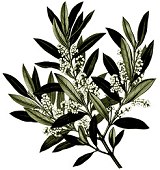
After the Second Temple was destroyed, the sages of the Diaspora continued to celebrate Tu B'Shevat by eating various fruits and nuts that were grown in the Promised Land. In synagogue services it became customary to partake of the seven types of grains and fruits listed in the Torah (i.e., wheat, barley, grapes, figs, pomegranates, olives, and dates) while reciting the prescribed Hebrew blessings. Almonds were eaten to recall the bloom of the almond tree. Carob also became associated with Tu B'Shevat because it was commonly eaten while traveling to Jerusalem during the days of the Temple (carob is an ideal traveling food since it does not spoil).
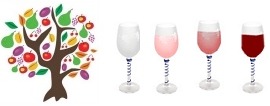
In the sixteenth century, however, the mystics of Safed "reinvented" Tu B'Shevat to represent a time to "repair" the original sin of eating from the Tree of the Knowledge of Good and Evil in the Garden of Eden. These mystics developed an esoteric "seder" that focused on the "Tree of Life" (עֵץ־חַיִּים), which they understood to mean the spiritual powers that impart divine energy to the physical world (called sefirot, or divine attributes). Four cups of wine are drunk during the seder, with varying percentages of red and white wine, representing the shifting of yearly seasons. And since the Torah particularly praises seven crops - wheat, barley, grapes, figs, olives, dates, and pomegranates - samples of each of these "species" are eaten during the seder as well. Reciting blessings over the fruits and eating them was thought to release "divine sparks" hidden within the seeds, thus restoring the balance of the soul. The "Tree of Life" is one of the key metaphors in Kabbalistic thinking, and today this mystical approach is very popular in mainstream in Judaism (for more on this subject, see the Kabbalah pages).
Finally, in 1948 the Zionist dream of an independent State of Israel miraculously came to pass, and one of the first things the settlers did when they came back to their land was to plant trees and develop moshavim (collective farms). Reforesting the land by planting trees during Tu B'Shevat eventually became national custom. Today Israeli schoolchildren plant trees in special ceremonies (neti'at etzim), and people living in the Diaspora often donate money to plant trees in Israel through the services of the Jewish National Fund. Tu B'Shevat therefore resembles an "Israeli Arbor Day" when trees are planted and the rebirth of the Jewish homeland is celebrated. It is customary to eat "first fruits" from the Land of Israel on this date, to recite various Hebrew blessings, and to discuss Jewish values such as tikkun olam ("repairing the world"), tza'ar ba'alei chayim (alleviating "the suffering of living creatures"), ahavat Yisrael ("love of Israel"), bal taschit ("do not destroy"), and so on.
|
|
|
|
|
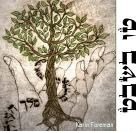
The Tree of Life - עץ החיים
|
|
|
Though Tu B'Shevat is not explicitly mentioned in the Torah as a holiday, the Scriptures clearly teach that God is the Creator of all life - including vegetative life (Gen. 1:11-13). God created the "seed bearing plants and fruit trees of every kind... and God saw that it was good."And God said [to Adam], "Behold, I have given you every plant yielding seed that is on the face of all the earth, and every tree with seed in its fruit. You shall have them for food" (Gen. 1:29). The warning to care for God's creation is found in various midrashim:
The Holy One led Adam through the Garden of Eden and said, "I created all my beautiful and glorious works for your sake. Take heed not to corrupt and destroy My world. For if you destroy it, there is no one to make it right after you." (Eccl. Rabbah 7:13)
|
|
|
|
|
|
|
The Scriptures explicitly state various laws regarding the use of trees. In other words, there is a "Torah of Trees." For example, "When you enter the land and plant any tree for food, you shall regard its fruit as "uncircumcised" (i.e., orlah: עָרְלָה) for three years; in the fourth year all its fruit shall be holy, an offering of praise to the LORD; only in the fifth year may you use its fruit, to increase its yield for you: I am the LORD your God" (Lev. 19:23-25; 26:3-4).
The Torah also clearly forbids the destruction of fruit trees during times of warfare:
When you besiege a city for a long time... you shall not destroy its trees by wielding an axe against them. You may eat from them, but you shall not cut them down. Are the trees of the field human, that they should be besieged by you? (Deut. 20:19)
Notice that the phrase, "are the trees of the field human..." (i.e., כִּי הָאָדָם עֵץ הַשָּׂדֶה) suggests that since trees are unable to flee the city and escape they should be shown mercy. In other words, God cares about the trees of the field and does not want them needlessly destroyed (this ethical principle became embodied in the environmental law called bal tashchit (בַּל תַּשְׁחִית), "do not destroy").
Clearly God cares for trees. The psalmist describes the trees of the forest as singing for joy (Psalm 96:12), just as the prophet Isaiah foretold the day when the trees of the field shall "clap their hands" in praise to the LORD God of Israel (Isa. 55:12). The ideal righteous man is described as being like "a tree planted by the rivers of water, bearing fruit in his season" (Psalm 1:3).
It was an old Jewish custom to plant a cedar tree when a boy was born and a pine tree when a girl was born. When two people were married, branches from these trees were used to make poles for their wedding canopy.... (The custom of planting of a "marriage tree" at the birth of a child is called neti'ah shel simchah, "a joyous planting.") On a spiritual level, this pictures being "grafted in" and made part of the marriage canopy of Yeshua, etc.
The Torah's allusion that human life is "like the tree of the field," i.e., כִּי הָאָדָם עֵץ הַשָּׂדֶה, Deut. 20:19), has led many people to observe Tu B'Shevat as time to assess man's place within creation as well. Since God created the world for a habitation (Isa. 45:18), some have pictured the world itself as a "great tree" with human beings as its fruit. Yeshua often used such agricultural images in his parables. For example, he explained that people are known by the "fruits" of their lives (Matt. 7:16-20). He likened the spread of his message in terms of "sowing and reaping" (Matt. 13:3-23) and compared the Kingdom of Heaven to the secret working of a mustard seed (Matt. 13:31-32). Yeshua regarded the world as a "field" for planting with different "types of soil" (Matt. 13:38-43), and warned of the "great harvest" of souls at the end of the age (Luke 10:2; Matt. 13:30). He pointed to signs from a fig tree to indicate the nearness of the prophesied End of Days (Matt. 24:32-33). Yeshua also used the metaphor of a "vine and its branches" to explain how his followers are to be connected to Him (John 15:1-6).
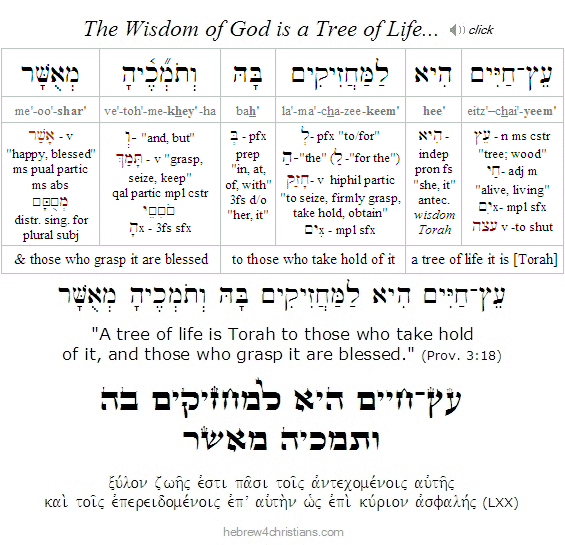
During the night of Tu B'Shevat, Orthodox Jews read Pri Etz Hadar (literally "Fruit of Goodly Trees"), a booklet that contains selections from Torah, Mishnah, Gemarah, and Zohar regarding trees, fruit, fruitfulness, and so on. King Solomon declared: "The fruit of the righteous is a tree of life, and whoever captures souls is wise" (Prov. 11:30). The one who delights in the Torah (תּוֹרָה) and meditates upon it daily is likened to a tree planted by streams of water that yields fruit in its season. All that he does shall prosper (Psalm 1:1-3). The wisdom of Torah (chochmat haTorah) is metaphorically called etz chaim, a "Tree of Life." As the Torah service ends at the synagogue, it is customary to sing, "It is a tree of life to those who take hold of it, and whoever grasps it close will be made happy" (Prov. 3:18). Just as the root system of a tree is a source of sustenance for its fruit, so the Torah is the root source of wisdom for the Jew.
עֵץ־חַיִּים הִיא לַמַּחֲזִיקִים בָּהּ
וְתמְכֶיהָ מְאֻשָּׁר
eitz-chai·yeem · hee · la·ma·cha·zee·keem · bah
ve·toh·me·khe'·ha · me·oo·shar

"A tree of life [עֵץ־חַיִּים] is Torah to those who take hold of it,
those who grasp it are blessed." (Prov. 3:18)
Download Study Card
Hebrew Lesson
Proverbs 3:18 Hebrew reading (click):
 |
The Bible begins and ends with the Tree of Life -- first in the orchard of Eden, and then in the midst of the paradise of heaven. "The Tree of Life (etz ha-chayim) was in the midst of the garden.." (Gen. 2:9). "Then the angel showed me the river of the water of life, bright as crystal, flowing from the throne of God and of the Lamb through the middle of the street of the city; also, on either side of the river, the Tree of Life (etz ha-chayim) with its twelve kinds of fruit, yielding its fruit each month...." (Rev. 22:1-2).
Notice that the "twelve fruits" (καρποὺς δώδεκα) from the Tree of Life are directly linked to the "twelve months" of the Jewish year (κατὰ μῆνα ἕκαστον ἀποδιδοῦν τὸν καρπὸν αὐτοῦ: "each month rendering its fruit"). Twelve months; twelve fruits.... The sequence of the holidays (moedim) was always intended to teach us great revelation about God. That is why God created the Sun and the Moon for signs and for "appointed times" (Gen. 1:14). As it is also written: "He made the moon to mark the appointed times (לְמוֹעֲדִים); the sun knows its time for setting" (Psalm 104:19). Note further that the Majority Text of Revelation 22:14 reads: "Blessed are those who do His commandments (Μακάριοι οἱ ποιοῦντες τὰς ἐντολὰς αὐτοῦ) so that they may have access the Tree of Life..." Faith and obedience are two sides of the same coin.
The great command is to "Choose life!" in everything we do. If we live in faith, resurrection life will triumph in us through the Messiah. We will become agents of hope and healing to a dark and lost world... And when our redemption is finally complete, even the trees of the field will clap their hands in joy! May that day be soon, chaverim....
|
|
|
|
A Tu B'Shevat Blessing
|
|
|
|
You may wish to recite the following blessing during Tu B'Shevat:
יְהִי רָצוֹן מִלְּפָנֶיךָ יהוה אֱלהֵינוּ וֵאלהֵי אֲבוֹתֵינוּ
שֶׁתְּחַדֵּשׁ עָלֵינוּ טוֹב וּפוֹרֶה שָּׁנָה
בַּאֲדנֵינוּ יֵשׁוּעַ הַמָּשִׁיחַ, אָמֵן
ye·hee · ra·tzon · meel·fa·ney'·kha · Adonai · E·lo·hey'·noo · ve·lo·hey · a·vo·tey'·noo
she·te·cha·desh · a·ley'·noo · tov · oo·fo·reh · sha·nah
ba·a·do·ney'·noo · Ye·shoo'·ah · ha·ma·shee'·ach · a·men
"May it be Your will, LORD our God and God of our fathers,
that you renew for us a good and fruitful year
in our Lord Yeshua the Messiah. Amen."
Download Study Card
|
|
|
|
Modern Tu B'Shevat Customs
|
|
|
|
There are various minhagim (customs) associated with Tu B'Shevat, including:
|
|
|
|
- Taking part in a tree planting ceremony (neti'at etzim).
- Making an donation to Israel for purposes of beautification of the land (click here for the Jewish National Fund).
- Eating different kinds of fruit (i.e., "the Seven Species," or shivat ha-minim: שִׁבְעַת הַמִּינִים) and reciting Borei pe'ri ha-etz and Shehecheyanu on this date.
- Participating in a Tu B'Shevat Seder.
- Planting your own parsley so it will be ready in time for your Passover seder.
|
|
|
|
|
|
A Story from the Talmud
|
|
|
|
|
|
Once, when Choni Hamagel was walking on the way, he saw a man planting a carob tree. Choni asked him "How long will it take for the tree to bear fruit?" The man answered "Seventy years." Choni then asked him, "And are you sure that you will live seventy more years and eat the fruit?" The man responded, "I found this world planted with carob trees. Just as my fathers planted those trees for me, so too, I must do the same for my children after me."
(Babylonian Talmud Taanit 23a)
|
|
|
|
|
This story represents the concept of tikkun olam - the repair of the world. By celebrating the presence of trees in our lives and by planting new ones, we cooperate with the LORD in "tending the garden" of the good earth. Indeed, the LORD created the trees of the field to "clap their hands" in celebration of His glory (Isaiah 55:12), and by planting new trees, we participate in the song of life that ever sings His praise.
|
|
|
|
Four Jewish New Years...
|
|
|
|
Note Judaism has four Rosh Hashanah's (New Years) observed every year:
- Nisan 1 - This is the Biblical New Years Day, the start of the month of the Exodus from Egypt and the beginning of Jewish national history. Nisan 1 is also the first for counting the Festivals of the Hebrew Calendar and the reckoning of the years of reign of the Kings of Israel (if a king began his reign in the month before Nisan, then in Nisan, he is considered to be in the second year of his reign).
- Elul 1 - This is the start of the year from the point of view of tithing of cattle for temple sacrifices. It also marks the time of Selichot, or preparation for repentance on the Jewish calendar.
- Tishri 1 - This is the Rosh Hashanah of the Fall, the start of the Jewish civil year. This is also the starting date of the ten-day "trial" of humanity that climaxes on the Day of Atonement (Yom Kippur) when the fate of each one is sealed.
- Shevat 15 - This is the Rosh Hashanah for trees. This date occurs on the full moon of Shevat (when it is fully "ripe") rather than at the new moon (as with the other Rosh Hashanahs). Historically, Tu B'Shevat used to be a day of tithing produce from fruit trees (any fruit ripening after this date was to be assessed for tithing for the following tax season). Today Tu B'Shevat represents a national Arbor Day in Israel, with tree planting ceremonies and donations made to the Jewish National Fund for the promotion of horticultural improvements in Israel. According to Jewish halakhah (rabbinical law), work is not prohibited, there are no required festive meals, and no special prayers added to the regular prayer services on this minor festival.
|
|
|
|
The Sign of the Almond Tree
|
|
|
|
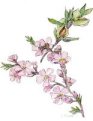
The almond tree has special significance for Tu B'Shevat. The word for "almond" is shakeid (שָׁקֵד), which comes from a root that means to "watch" or "wake" (i.e., shakad: שָׁקַד). The almond tree is the among the first trees to "awaken" from its winter sleep... We therefore eat almonds (שְׁקֵדִים) on Tu B'Shevat to celebrate the return of spring.
|
|
|
|
|
|
In the Scriptures there is a play on words regarding the use of "almond" and God's "watchfulness" (i.e., faithfulness): "And the word of the LORD came to me, saying, 'Jeremiah, what do you see?' And I said, 'I see an almond branch (מַקֵּל שָׁקֵד אֲנִי ראֶה).' Then the LORD said to me, 'You have seen well, for I am watching (כִּי־שׁקֵד אֲנִי) over my word to perform it'" (Jer. 1:11-12).
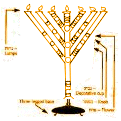
The blooming branch of an almond tree is breathtakingly beautiful - so much so that the LORD decorated the Menorah (מְנוֹרָה) with oil cups (i.e., gevi'im: גְבִעִים) in the shape of almond blossoms (Exod. 25:33-34; 37:19-20). Indeed, the Menorah itself is a symbol of the "Tree of Life" (עֵץ־חַיִּים) and therefore it is fitting to regard it during this season...
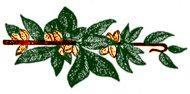
Finally, some have said that Aaron's rod (מַטֵּה־אַהֲרן) - the staff he used to perform signs and wonders during the Exodus - was made from a branch of an almond tree.... Recall that during the incident of Korach's rebellion, Aaron's rod budded, flowered and produced almonds overnight (Num. 17), which was symbolic of the power of the "resurrected priest of God" that was coming...
 |
Just as God exclusively chose Aaron to minister before Him, so Yeshua was the exclusively chosen to be the greater High Priest of the New Covenant. Regarding His priesthood "after the order of Malki-Tzedek," the author of Book of Hebrews wrote: "No one takes this honor for himself, but only when called by God, just as Aaron was" (Heb. 5:4). And just as Aaron's lifeless rod miraculously brought forth life, Yeshua's cross -- likewise made of wood -- also "budded and produced blossoms" after His resurrection from the dead. Yeshua went into the sanctuary made without hands and there offered his blood to procure for us an everlasting atonement. His sacrifice as our High Priest gives us life from the dead! Under the terms of the Sinai covenant, "Aaron's rod" was a picture of God's authority and judgment, just the Messiah's cross and resurrection vindicates God's exclusive choice of Yeshua as our Mediator before God. Those who reject His choice will ultimately share the same fate as those who partook of Korach's rebellion (Jude 1:11).
Yeshua (alone) is Adonai Tzidkenu (יְהוָה צִדְקֵנוּ), "the LORD our Righteousness" and Tzemach Tzaddik (צֶמַח צַדִּיק), God's "Righteous Branch." Praise His Name forever.
|
|
|
|
How Trees Help Israel...
|
|
|
|
Trees benefit Israel in countless ways, from beautifying the land to stopping soil erosion to reducing noise and air pollution. Indeed, the tree symbolizes the revival of Israel's land, and the Jewish people's bond with that land.
Israel is perhaps the only country on earth whose forests, instead of desert lands, are increasing. Trees are also essential to the thriving agricultural communities in the Negev.
|
|
|
|
Tu B'Shevat can be a day to celebrate the Torah – the tree of life!
"She is a tree of life to them that lay hold upon her:
and happy is every one that retaineth her." (Proverbs 3:18)
|
|
|
|
If you would like to celebrate Tu B'Shevat with your friends or family, I've created a simplified (and non-Kabbalistic) Tu B'Shevat Seder Guide that will give you some idea about how to perform your own home ceremony:
|
|